
Commercial HVAC Businesses for Sale
If you’ve looked into commercial HVAC businesses for sale, you’ve probably noticed they often operate on different terms than the residential HVAC acquisition market. The larger contract values, clients with more formal processes, more complex equipment, and a workforce that requires additional technical certifications affect how commercial HVAC companies are valued.
Whether you’re evaluating a commercial HVAC business to invest in or you own one and are considering when and how to exit, it’s important to understand what sets this sector apart. Commercial HVAC companies have unique buyers, preparation requirements, and value drivers that set them apart from residential HVAC. Taking a one-size-fits-all approach can lead to missed opportunities and lost value.
Here’s why commercial HVAC companies are attractive acquisition targets, what buyers look for, how the purchase and sale of HVAC businesses typically work, and the key steps sellers should take before entering the market.
What Makes Commercial HVAC Different from Residential
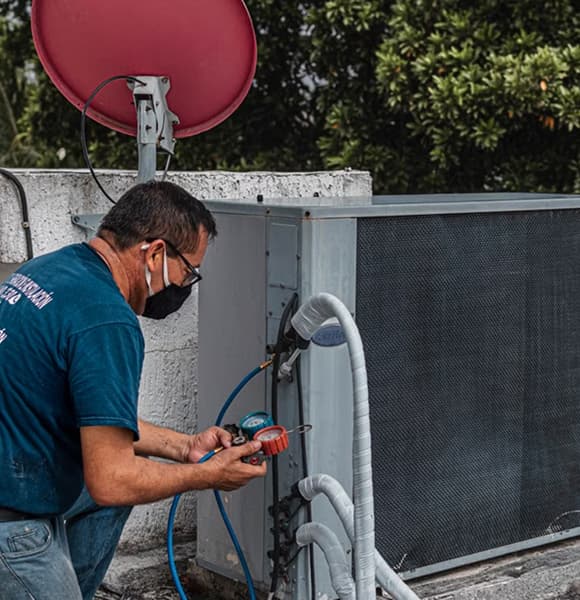
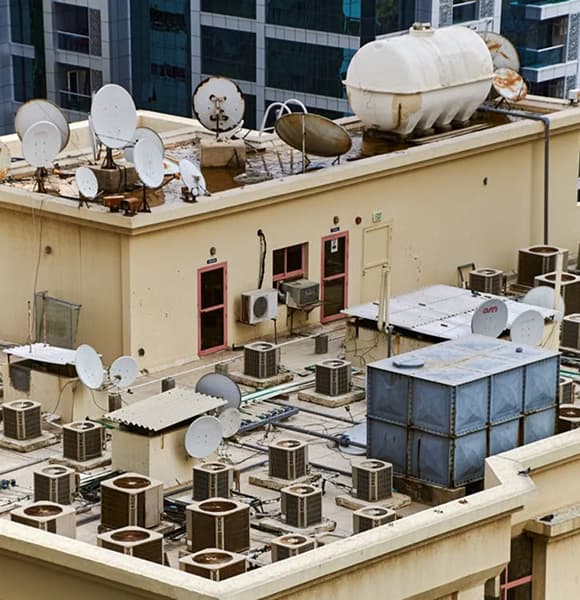
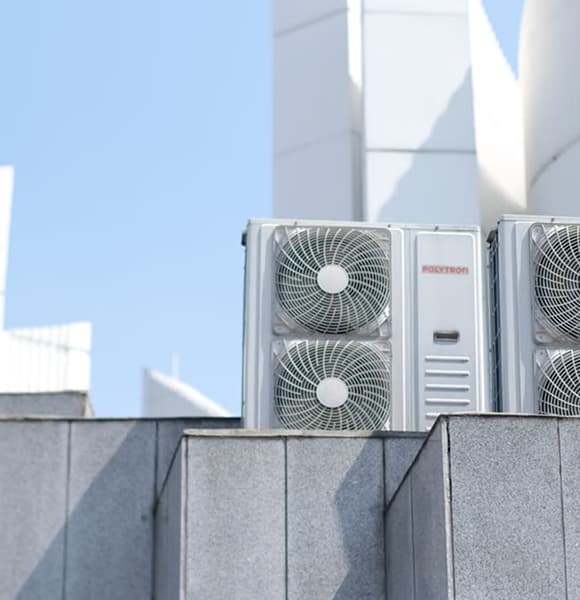
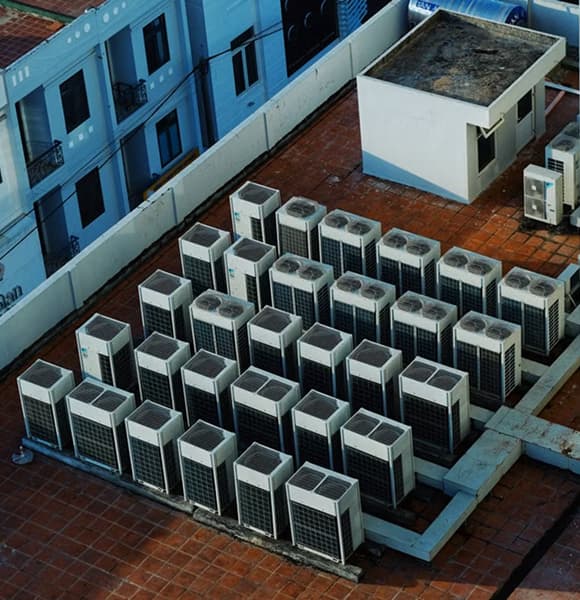
Commercial HVAC businesses serve non-residential customers, including office buildings, retail centers, industrial facilities, schools, hospitals, data centers, and multi-unit residential properties. Unlike residential HVAC companies, they work with larger and more complex systems, such as rooftop units, chillers, cooling towers, building automation systems, and commercial boilers.
These larger systems and customers typically result in much higher contract values. A single commercial service agreement can be worth 10 to 50 times as much as a typical residential maintenance contract. While larger contracts can often yield more predictable revenue, they also entail greater financial risk if a company depends heavily on a small number of accounts.
Revenue patterns also tend to look different in the commercial space. Many commercial HVAC companies combine recurring service agreements with project-based work, including new construction and equipment or system upgrades. This mix can create greater month-to-month revenue swings than for residential companies that typically rely heavily on maintenance agreements.
Commercial HVAC businesses can generate strong profit margins, especially through service agreements and complex installation projects where specialized expertise adds value. However, margins can be more limited on highly competitive bid work or routine commercial service, where setting your pricing lower than a competitor’s may secure a contract.
Commercial HVAC as an Investment Opportunity
If you are a buyer looking at a commercial HVAC and air business for sale, there are a few things to keep in mind. Commercial service agreements are often built around multi-year relationships, structured renewal processes, and clearly defined terms.
Many institutional customers, such as government agencies and schools, plan facility budgets well in advance and often prioritize reliability and service quality over simply choosing the lowest price. When customers continue to renew their agreements year after year, the business benefits from more predictable revenue.
The commercial market also benefits from ongoing regulatory and industry trends. Updates to energy standards, refrigerant rules, and the growing use of automated building systems are creating ongoing demand for HVAC upgrades and replacements.
Buyers who acquire a commercial HVAC company with experienced technicians and strong customer relationships are already positioned to capitalize on this demand, rather than having to build those capabilities from the ground up.
The tradeoff is customer concentration. Commercial HVAC companies often generate a lot of their revenue from a relatively small number of clients. A key part of evaluating an acquisition is understanding how durable those relationships are, whether contracts can transfer to a new owner, and whether any change-of-control provisions could impact the business after a transaction.
What Buyers Evaluate in a Commercial HVAC Acquisition
If you’re ready to sell your HVAC business, be prepared to show the following to potential buyers.
Contract stability and transferability. Commercial service agreements are typically multi-year contracts with defined service scopes, response time requirements, and renewal terms. Buyers evaluate how long the existing agreements run, what the renewal history looks like, and whether the contracts transfer with the business or require individual client consent. Agreements that require client consent add steps to the closing process and increase the risk that some accounts won’t survive the transition.
Client creditworthiness and concentration. Buyers will want to see how dependable your customers are. Institutional customers, such as government facilities, school districts, and hospitals, often provide more predictable revenue through long-term contracts and consistent payment history. However, other commercial customers, including restaurants and smaller hospitality businesses, may pose a greater risk due to changing market conditions or financial pressures. Those risks can show up in slower payments and outstanding invoices, not just in overall revenue numbers.
Buyers will also want to know how your business is distributed among customers. Any customer that represents 30% or more of total revenue deserves careful attention. Risk increases when any one client accounts for too much of the business revenue.
Technical depth of the workforce. Commercial HVAC technicians require certifications and skills beyond what’s standard in residential work. Buyers will likely want to assess technical depth by verifying EPA 608, electrical certifications, building automation system competency, and experience with commercial refrigeration or chiller systems. They may also look at whether important certifications are shared across the team or depend on just one or two individuals. If those employees leave, the company could face challenges maintaining operations or meeting requirements.
Project work vs. service work split. Many commercial HVAC companies generate revenue from both recurring service agreements and project work, such as new construction and equipment replacements. Unlike service agreements, project work can be less predictable and may experience variability in monthly revenue, workload, and staffing needs.
Buyers need to understand how much of the business comes from projects, what future projects are already in the pipeline, and whether that work comes from long-standing customer relationships or one-time opportunities.
Equipment and tooling. Commercial HVAC operations often involve significant investments in specialized test equipment, diagnostic tools, and vehicles that are configured for commercial work. Review the age, condition, and ownership status of all major assets. Equipment that’s leased or financed creates obligations that belong in the deal structure, not as surprises during due diligence.
Licensing and certifications. Commercial HVAC businesses often hold company-level contractor licenses and specialty certifications required to bid and perform work in their service area. Verify that all licenses are current, properly held in the selling entity or by key employees who will remain after closing, and transferable under the structure of the deal.
How Commercial HVAC Deals Are Structured
Most commercial HVAC business sales are structured as asset sales, which are usually cash-free and debt-free at closing. The buyer generally acquires the business’s assets, including equipment, vehicles, customer contracts, and the business name, without assuming the seller’s existing debt. Any outstanding liabilities are paid from the sale proceeds before the remaining funds are distributed to the seller.
The sales process for these companies generally follows the same sequence as any HVAC acquisition: a qualified buyer signs an NDA, reviews the confidential information package, submits a letter of intent, conducts due diligence, and proceeds to closing. Commercial HVAC deals often require more time and coordination than smaller residential transactions, especially when transitioning larger commercial accounts and institutional customers.
Financing options depend on the size of the transaction and the buyer involved. Smaller commercial HVAC acquisitions may qualify for SBA 7(a) loans, while larger deals are typically funded through conventional commercial loans or private-equity-backed structures.
What the Transition Looks Like in a Commercial HVAC Sale
Transitions in commercial HVAC businesses require more planning for two main reasons:
- Institutional clients’ processes. Clients like schools or hospitals often have formal vendor approval processes. A change in ownership may trigger a review of the service relationship. Managing that proactively, with the seller’s cooperation during the transition period, is more effective than informing clients after the fact.
- Employee certifications and relationships. Employees may build strong relationships with their clients because they often work together on large projects over several years. This time and work can build trust between the tech and the client. In addition, employees with technical certifications are more concentrated in commercial businesses than in high-volume residential operations. Retaining those individuals through and after the transition belongs in pre-closing planning, not as an afterthought once ownership transfers.
A well-structured agreement should also define how long the seller stays on, what their responsibilities are, and how client introductions and knowledge transfer happen. Buyers who invest in a clean transition help protect both the client relationships and the workforce.
Active Markets for Commercial HVAC Acquisitions
There tends to be more commercial HVAC acquisition in states with large commercial real estate inventories, strong institutional sectors, and sustained construction activity.
For example, Florida has a deep market for commercial HVAC acquisitions driven by year-round cooling demand from commercial real estate, hospitality, and healthcare facilities. The state attracts a consistent pool of regional operators and Private Equity (PE) platforms seeking commercial HVAC acquisition targets with strong institutional client bases and established service agreement programs. View commercial HVAC businesses for sale in Florida for current listings and market context.
Texas, California, Georgia, and the Southeast corridor are also active commercial HVAC markets. They are fueled by population growth across the mechanical services space.
Prepare a Commercial HVAC Business for Sale
The commercial HVAC business sales process has preparation requirements that residential-focused sellers don’t typically face. About 12 to 24 months before you engage a broker, be sure to address the following:
Audit your service agreement transferability. Commercial contracts often contain change-of-control provisions or require individual client consent to assign. Review every material service agreement before you list the business. Agreements that need client consent to transfer should have a resolution plan before due diligence begins.
Build a management structure that operates without you. PE platforms and strategic acquirers pay a meaningful premium for commercial HVAC businesses with documented management depth. A named service manager, a supervisory structure for the technician team, and project management processes that function without the owner’s daily involvement often support a higher value.
Document client relationships beyond the contract itself. Do you have significant revenue tied to a small number of institutional clients? Be sure to document renewal history, service correspondence, and client contacts who work directly with your management and technician team. This will help the business transfer smoothly to the new owner and reduce the risk of attrition in buyer underwriting.
Present your project pipeline with documentation. If your business does significant installation or retrofit work, buyers will evaluate the quality of your project backlog. Signed contracts and documented scope give buyers confidence in short and long-term revenue. Many verbal agreements or unsigned proposals can introduce uncertainty that buyers may consider before writing an offer.
Work with commercial HVAC business brokers who know the sector. Commercial HVAC business brokers often have experience in institutional client environments, multi-year service contracts, and PE buyer requirements. They are likely to know how to present your workforce certifications, client base, and project pipeline in terms that resonate with potential buyers. A generalist broker may lack the buyer relationships or market knowledge to sell your business efficiently.
Find Commercial HVAC Businesses for Sale
Most commercial HVAC companies are not publicly listed. Sellers in this category work with specialized brokers who market confidentially to qualified acquirers. Open-market listings on general business sale platforms expose sensitive client and contract information and rarely attract active institutional or PE buyers.
Buyers looking to acquire a commercial HVAC business for sale may benefit from working with a broker who maintains a current database of commercial sellers, understands how to evaluate commercial service agreement portfolios and technical workforces, and knows which buyers in this category are actively looking for deals in their target geography and deal size range.
For buyers exploring both commercial and residential HVAC opportunities, a full view of available inventory by region is available through the HVAC businesses for sale near me location hub.
How Business Modification Group Works with Buyers and Sellers
Business Modification Group works across the full HVAC sector, including commercial HVAC companies. Our founder, Patrick Lange, is a former HVAC business owner who understands commercial operations, contract structures, and the workforce dynamics that determine whether a commercial HVAC acquisition succeeds after closing.
For sellers, we bring the knowledge and buyer relationships required by the commercial HVAC sales process. For buyers, we match acquisition criteria against available inventory that has been properly prepared and presented by sellers who understand what their buyers want and need.
Reach out to start a conversation about buying or selling a commercial HVAC company.
FAQs
How are commercial HVAC businesses valued differently from residential ones?
Commercial HVAC companies are typically valued using Earnings Before Interest, Taxes, Depreciation, and Amortization (EBITDA) multiples rather than the Seller’s Discretionary Earnings (SDE). SDE multiples are commonly used for smaller, owner-operated residential HVAC businesses. This is because commercial companies tend to be larger, have established management teams, and are more comparable to institutional investments.
Commercial HVAC operators focused on service and preventative maintenance agreements generally receive higher valuations than businesses that rely heavily on installation or construction work. This is because buyers typically value recurring revenue for its more predictable, stable cash flow.
For comparison, residential HVAC companies with similar revenue may be priced at two to four times SDE, while a well-positioned commercial with strong recurring service and maintenance revenue may command significantly higher value, particularly from PE firms.
Does my ratio of service work to installation work affect the value I can expect?
Revenue mix is one of the most significant valuation drivers in commercial HVAC acquisitions. Service-to-installation ratio often receives more scrutiny from buyers in commercial deals than in residential ones. Preventive maintenance agreement revenue is predictable, recurring, and highly transferable. In contrast, installation and new construction revenue are project-based, cyclical, and tied to construction activity and economic conditions. Commercial HVAC businesses that generate at least 40% of their earnings through service agreements tend to sell for more than businesses that rely primarily on installation or new construction work.
What happens to active construction projects that are in progress when the business sells?
Active construction projects are transferred to the buyer along with the contracts governing them. The purchase agreement addresses how works in progress are accounted for in the working capital calculation at closing. This is because partially completed projects have both incurred costs and unrealized revenue. Buyers often evaluate the quality and profitability of active projects during due diligence, which is one reason having signed contracts with documented scope and margin data is so important.
What is a Quality of Earnings report? Should I expect one in a commercial HVAC deal?
A Quality of Earnings report (QofE) is a detailed financial analysis conducted by a third-party accounting firm on behalf of the buyer. It goes beyond reviewing historical financials to test whether the earnings are sustainable, recurring, and properly stated. It also scrutinizes add-backs, revenue recognition practices, and any items that could inflate or misstate the normalized earnings figure used to price the deal. PE buyers and most serious institutional acquirers will commission a QofE on commercial HVAC transactions. Sellers who have organized financials and well-documented add-backs often move through the process faster and with fewer surprises.
What size commercial HVAC business typically attracts PE buyers?
Most PE platforms target businesses with $1 million or more in EBITDA. However, some platforms focused on smaller add-on transactions will look at companies below that threshold. This is usually when the market position, service agreement base, or geographic footprint is compelling. Smaller commercial HVAC companies are more likely to attract regional operators or individual buyers with HVAC operational experience rather than institutional capital.
How do I notify institutional clients about a change of ownership without triggering contract review clauses?
Work out the client notification strategy with your attorney and the buyer before closing day, not after. Many commercial service agreements include change-of-control provisions that trigger a review or require client consent, and the timing and content of the notification can determine whether those clients renew or exercise termination rights. The most effective approach is usually a coordinated introduction from both the seller and the buyer, with clear messaging about how customer service, the technician team, and management will look during and after the transition.
What happens if my mechanical contractor license is held in my personal name rather than in the business entity's name?
This is common and needs to be disclosed before due diligence begins. The buyer must plan how the business will maintain licensed contractor status after closing, which may involve sponsoring an existing employee for licensure, arranging a short overlap period during which you remain available for licensing, or working with your state’s licensing board on a transfer.
Does union or non-union labor status affect commercial HVAC valuation?
The labor model can affect both valuation and the buyer pool. Union commercial HVAC businesses typically have predictable wage and benefit costs based on collective bargaining agreements, which buyers consider when evaluating potential earnings and working capital. Some PE platforms and strategic buyers prefer union shops because they can offer workforce stability and certified employees. Others prefer the flexibility of a non-union workforce. Ultimately, buyers want to see that the company’s labor model is clearly documented, consistently managed, and accurately reflected in its financial statements during due diligence.
What are the most common deal killers specific to commercial HVAC transactions?
The four issues that most often derail commercial HVAC deals are undisclosed change-of-control provisions in service agreements, contractor licensing concentrated in the owner personally, a project backlog that doesn’t hold up under due diligence review, and commercial revenue that is tied to the owner’s personal relationships instead of the business’s reputation and service quality. To prevent these factors from sabotaging a deal or reducing a purchase offer, resolve them before going to market.
What is a Preventive Maintenance Agreement, and why does it matter so much to commercial HVAC buyers?
A Preventive Maintenance Agreement (PMA) is a contract with a commercial client for scheduled HVAC inspections, maintenance, and priority service over a defined term, typically 1 to 3 years, with renewal provisions. These agreements create the recurring, predictable revenue that buyers value most in commercial HVAC acquisitions.
How does Building Automation System capability affect a commercial HVAC company's value?
Commercial HVAC businesses with documented Building Automation System (BAS) integration and capability, and the technical staff to support it, tend to command higher valuations than companies that service standard commercial equipment without controls expertise. BAS capability opens access to larger institutional clients, more complex multi-year service agreements, and competitive positioning in energy-efficiency retrofits. PE firms looking to grow commercial mechanical service businesses often see BAS capabilities as a valuable advance. Having BAS services can help a company serve more customers and generate higher-value contracts.
How long does the commercial HVAC business sales process typically take?
Commercial HVAC transactions generally run longer than residential HVAC sales, with the process from engagement to closing typically taking 9 to 15 months, depending on deal size and buyer type. The additional time reflects more complex due diligence, PE and institutional buyer requirements, QofE reports, investment committee approvals, and client transition planning. Sellers who have prepared thoroughly before engaging a broker, with organized financials, documented service agreements, and a management structure that operates without the owner, usually move through the process on the shorter end of that range.
