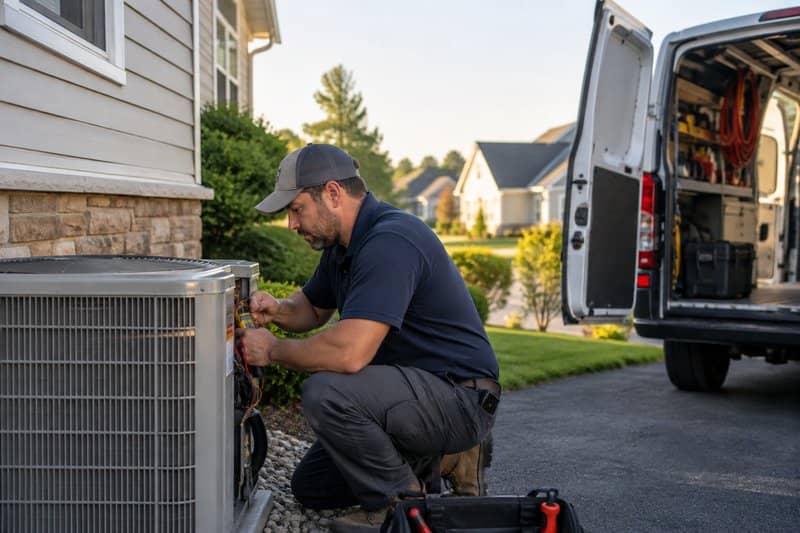
Yes, a one-truck HVAC business in New Jersey can sell, and it can sell well. Buyers looking for an HVAC business for sale in NJ often want a company that’s small, established, and easy to step into.
Fleet size doesn’t determine whether you can sell your business. Often, it comes down to how well your business runs when you’re not at the helm every day.
What Buyers Look for in a Small HVAC Company
Buyers usually aren’t comparing your business to a 10-truck operation across town. They know that comparing two very different HVAC businesses for sale isn’t helpful.
What they really need to know before they make an offer is if the company can make money without relying on one person’s memory and personal knowledge.
A profitable one-truck business with clean books can answer that question well. Buyers will see consistent revenue, a reliable customer base, and service agreements that lock in income.
Local reputation matters too. New Jersey has plenty of licensed HVAC contractors, so strong word-of-mouth and solid online reviews show that the business has staying power beyond its next job.
What Owner Dependence Does to Your Sale Price
As a sole trader, you have a huge responsibility to keep your business going. But when you answer every call, run every job, and keep every customer relationship in your head, a buyer sees risk instead of a business. That risk can mean they make a lower offer or an earn-out structure that ties part of your payout to results after you leave.
Picture two nearly identical HVAC companies. One depends on the owner for 100% of service calls and customer contact. The other has a lead technician who already handles half the calls and a simple system for tracking maintenance agreements.
Buyers will pay more for the second company because it can keep running after an ownership change.
A solo operator can still sell, and sell well. It just means preparation matters more when customers see the business and the owner as the same thing.
What Roadblocks Are Unique to Solo Operations
In many states, including New Jersey, the license you use to operate an HVAC business often belongs to an individual rather than the company itself.
If the business entity doesn’t hold the license, a buyer may need to bring their own license or have a qualified person ready before they can legally take over. Figure this out early so it doesn’t hold up a deal at the closing table.
Personal guarantees on supplier accounts, equipment financing, or a vehicle titled in your name instead of the company’s can cause similar headaches. Insurance policies and manufacturer warranty registrations may also list you personally instead of the business, which can raise the same question for a buyer’s lender.
None of these issues automatically kills a deal when you have a small HVAC business for sale. They are simply the kinds of details a buyer’s attorney will uncover during due diligence, so it’s much better to find them yourself and have an answer ready.
What Your One-Truck HVAC Business Could Be Worth
Most small HVAC companies use a multiple of seller’s discretionary earnings to determine value, which means your profit plus your salary and any personal expenses you run through the business.
A one-truck operation with strong profits and steady repeat customers can be worth more than its revenue alone might suggest. A business with thin or inconsistent profits may be worth less, even if it brings in more revenue.
Two factors can move that number more than anything else:
- How much of your revenue comes from recurring service agreements?
- How much of the customer relationship depends on you personally?
A company with a loyal maintenance customer base and a technician who isn’t you will usually command a higher price than one built entirely on your personal reputation.
An informal number pulled from a competitor’s sale or an online calculator only gets you so far. A proper HVAC business valuation looks at your books, customers, and local market before settling on a realistic value range.
What Makes a One-Truck Business Easier to Sell
A few specific moves can make your small HVAC company stand out to buyers.
Start with service agreements. A solid book of maintenance contracts turns unpredictable seasonal work into recurring revenue a buyer can count on before the deal even closes.
Solid documentation is also essential. Written processes for scheduling, dispatch, invoicing, and vendor accounts show buyers that the business runs on systems, not your personal memory. Even a simple shared folder covering these basics can change how a buyer views the risk of taking over.
Growth potential can make a business more valuable, too. An underserved service area, a customer list that has never seen much marketing, or the ability to add a second truck without spending a lot upfront can all make a business more attractive to buyers.
Clean financial records deserve their own mention. Buyers and their lenders want at least two to three years of profit and loss statements that match your bank deposits and tax filings. A business that handles cash jobs without a paper trail is much harder to finance, which can shrink your pool of qualified buyers before negotiations begin.
Who Typically Buys a Business This Size
First-time buyers are often a great fit for a one-truck HVAC company. Many use Small Business Administration (SBA) financing to buy an existing business rather than start from scratch, and a lower purchase price can make securing that financing easier.
Larger HVAC companies also buy small operations, usually to expand into a new town or add technicians faster than hiring alone would allow. For them, your existing customer base and local reputation are the real assets, often more valuable than your equipment.
Regional consolidators are also active in the trades, acquiring several small companies in a market and combining their back-office operations while keeping the local brand and crew in place. A well-run one-truck business can actually appeal more to a consolidator than a larger, messier operation because there’s less to untangle after closing.
Every one of these buyers is generally looking for a business that will keep running once you’re no longer the one holding everything together.
Positioning a Small HVAC Business for a New Jersey Sale
New Jersey’s dense population and steady demand for heating and cooling work in your favor. The market can support a business with a defined territory and a loyal customer base, even when the operation is kept small.
Start preparing well before you plan to sell. Clean up your books, put your processes in writing, and build service agreements where you can. These steps take time, and buyers can usually tell the difference between a business you prepared for sale and one you didn’t.
If you’re running a lean, one-truck operation, it helps to understand what your business is actually worth before you start making decisions about a sale. A valuation can give you a clearer picture of where things stand and what you may want to improve.