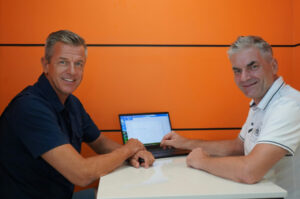
Las Vegas depends on HVAC; it’s nearly as essential as water, electricity, and gas. With summers that regularly climb past 110 degrees and commercial properties needing reliable climate control all year long, the demand for heating and cooling services here is about as steady as it gets.
That consistent need is one reason HVAC businesses for sale in Las Vegas can draw serious attention from buyers. But strong demand alone doesn’t create a high business valuation. What buyers see when they take a closer look at your operation matters too.
Why Buyers Scrutinize Technology in Las Vegas HVAC Companies
Las Vegas moves at a different pace than many other markets. The mix of extreme heat, dense commercial development, and nonstop demand in hospitality means HVAC companies here often stay busy for much of the year. That steady workload grabs buyers’ attention, but it also raises an important question: can your business handle that demand?
When buyers look at a Las Vegas HVAC company, they want to understand how the company creates revenue and whether its systems can support future growth.
During due diligence, buyers and their advisors will often review your scheduling process, service call records, and your management of recurring maintenance agreements. Those details help them determine whether they’re buying a business with room to grow or stepping into a role where they have to rebuild the operation themselves.
What Outdated Technology Signals to a Buyer
Technology gaps don’t always appear in your financial statements. But buyers often notice them in the way they evaluate risk.
Manual processes, for example, can create concerns about how dependent the business is on the owner. If the owner or a key employee keeps everything running because no standardized system is in place, buyers may face a harder transition ahead. They know that when you step away, the business could slow down or the customer experience could suffer. That added risk can affect the offer they make.
Outdated technology can also raise questions about future growth. Buyers looking at your business are usually thinking about what’s next. They want to know the systems they’re taking over can support more technicians, more customers, and more service agreements without creating problems. Older, clunky systems often suggest the opposite.
The Technology Systems Buyers Look For
The technology gaps buyers care about most are the ones that affect how efficiently your business runs and how clearly they can understand your revenue.
- Scheduling software: A business that still relies on phone calls and paper calendars is likely missing opportunities to improve productivity. Modern scheduling platforms help reduce dispatch time, keep technicians working efficiently, and create a clear record that buyers can review during due diligence.
- GPS dispatching: For a Las Vegas HVAC company managing a high volume of calls across a large metro area, better routing can directly impact how many jobs each technician completes in a day. Buyers pay close attention to revenue per technician, and improving that number becomes much harder without the right dispatch tools.
- Smart thermostat integrations: These integrations can create additional service opportunities while giving technicians better access to system performance data. Buyers see these tools as a sign that your company is adapting to changing customer expectations and using technology to improve their experience.
- Paperless systems: Buyers want to see that your business has clear processes and accessible documentation, rather than relying on outdated systems that depend on individual employees’ knowledge. Paperless systems help organize customer records, work orders, invoices, and service history in one place.
How Technology Affects What Buyers Are Willing to Pay
There is a link between the technology you use and your HVAC business valuation, as well as the level of risk buyers are willing to accept. When they find operational gaps, buyers know they will need to fix them after the sale, either by investing in new systems or by continuing to deal with an ineffective system. Either way, those challenges can lower what they’re willing to pay.
For example, imagine two Las Vegas HVAC companies making $1.8 million annually. One relies on manual scheduling, phone dispatch, and paper work orders. The other uses integrated field service software, GPS dispatching, and digital records. Those two businesses will likely receive different valuations because the buyer can see a much clearer path to growing the second company than spending time rebuilding the first.
A well-organized HVAC operation reduces a buyer’s concerns and can support a stronger valuation. A business with documented processes, strong revenue per technician, and systems that don’t depend on the owner’s personal knowledge is easier to transition and more attractive to buyers. For a Las Vegas HVAC company with steady demand and a strong service area, the difference between an average valuation and a great one often comes down to whether the operation truly supports the revenue it produces.
What Technology Upgrades Are Worth Making Before You List
Technology gaps are fixable, and addressing them before you list your business can give you a real advantage in the sale process.
The improvements that usually deliver the biggest return are the ones that make your operation easier to manage. A field service management platform that combines scheduling, dispatching, invoicing, and customer history in one place is one of the strongest tools you can present to a buyer. It shows that the business relies on proven systems rather than on a single person’s knowledge or daily routines.
GPS dispatching often pays for itself through shorter drive times and better technician productivity within the first year. That means it can strengthen your financial performance before the sale, not just make your business look more organized.
Paperless systems are another upgrade that offers significant value without a major investment. Replacing paperwork orders with digital invoicing and service records shows buyers that your operation is organized, efficient, and built to scale.
You don’t have to change everything overnight, but you should fix the gaps that buyers will notice first, as these are the ones that have the biggest impact on your business’s valuation.
Build the Business That Buyers Want to Buy
Las Vegas won’t ever stop needing HVAC services, and buyers in this market understand that.
What they want to know is whether your business is set up to meet that demand efficiently or whether they’ll spend their first year updating systems that should have been improved before the sale.
If you’re getting ready to sell, it’s worth taking a close look at your technology to understand what buyers focus on, well before you put your business on the market. This will help you feel more prepared, make your business as sale-ready as possible, and prevent unpleasant surprises once the sales process starts.
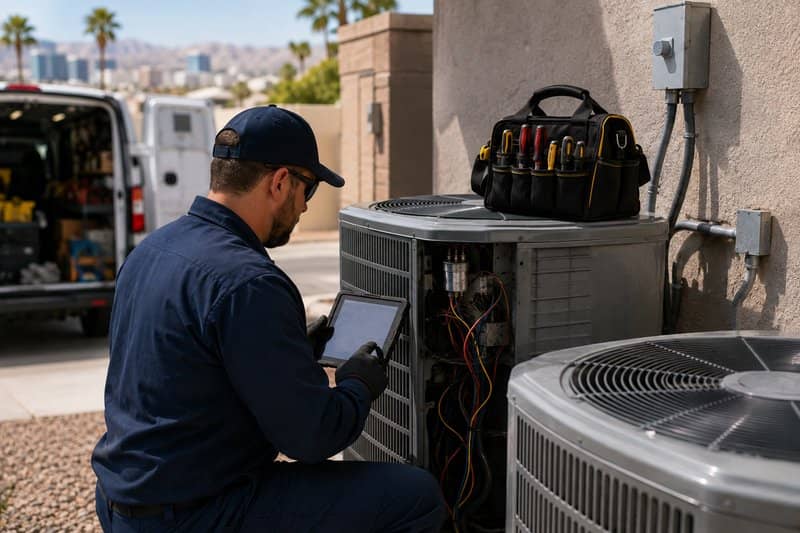
Video
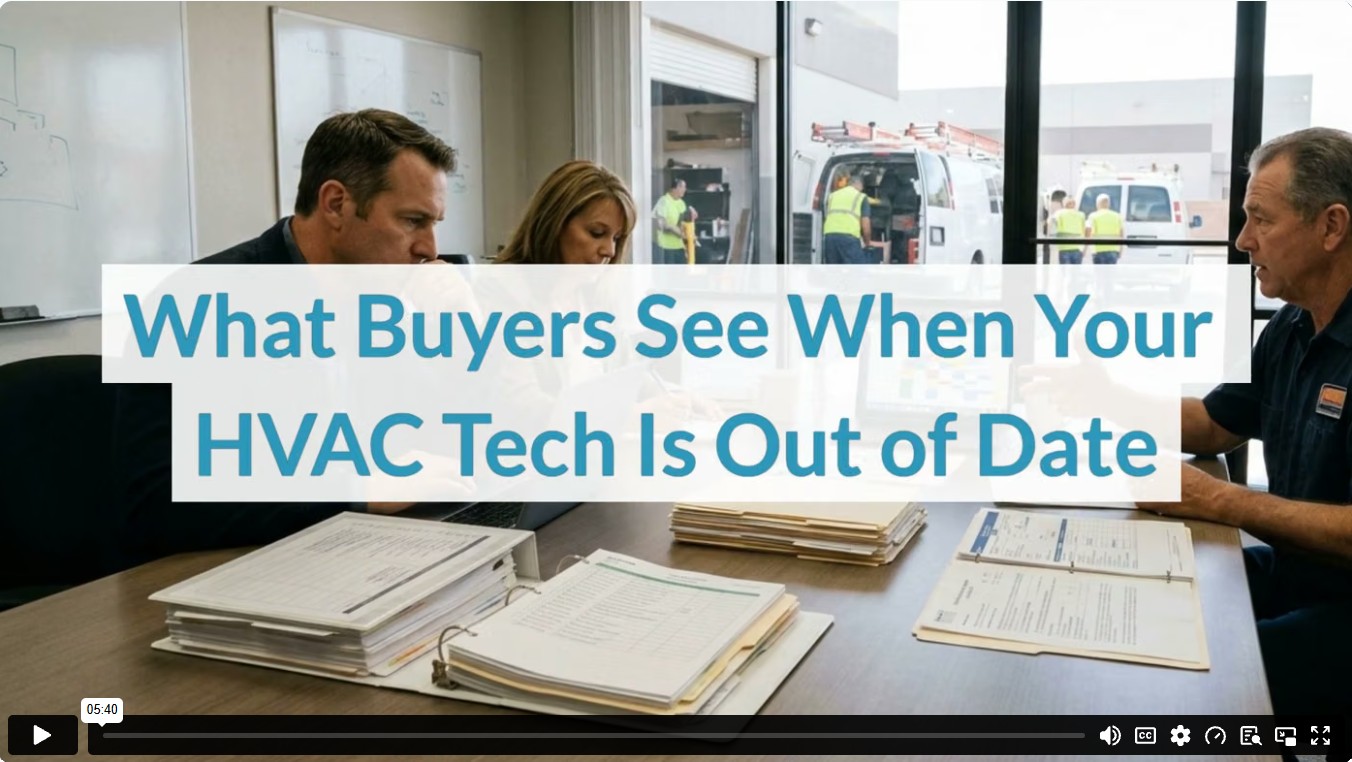
Infographic