When you’re selling your HVAC business, buyers will take a close look at every part of your company. They’ll review your equipment, customer list, team members, and financials. Most owners focus on the obvious parts of the business before a sale. Fewer spend enough time looking at their billing process.
Issues with invoicing can slow down a deal or make it more complicated than it needs to be. They may not stop a sale on their own, but they can create uncertainty, raise questions, and give buyers a reason to push for a lower price. Take care of these issues before you go to market. It’s an easy way to protect the value you’ve worked hard to build.
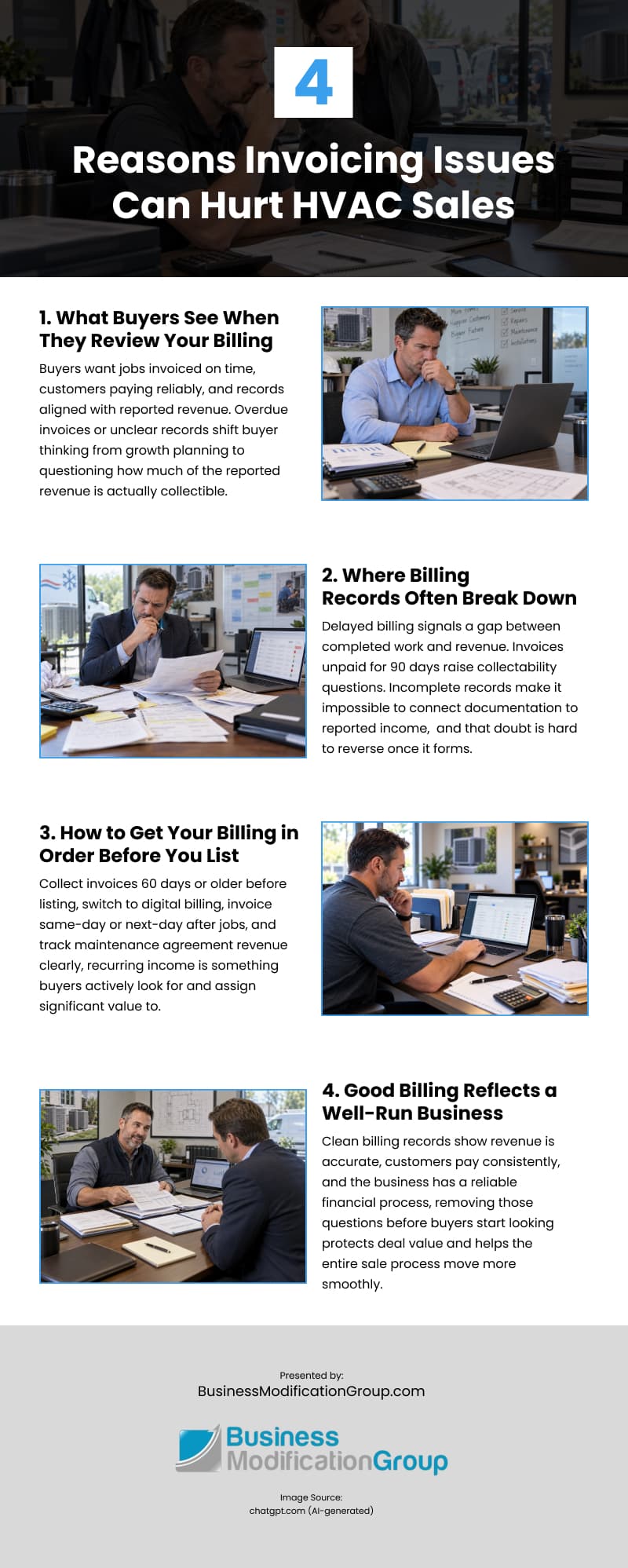
What Buyers See When They Review Your Billing
When a buyer reviews the finances of an HVAC business, they’re trying to build a clear picture of how money moves through the company.
They want to see that jobs are invoiced on time, customers pay reliably, and records align with reported revenue. That gives them confidence that the business is being managed properly and that they aren’t inheriting problems.
Your billing records can either reinforce a buyer’s confidence or raise doubt about the business. If a buyer sees months of overdue invoices, a long list of unpaid accounts, or unclear financial records, they’ll start looking at the business differently. Instead of asking, “How can I grow this company?” they start asking, “How much of this revenue is actually real and collectible?”
Once a buyer starts thinking that way, it’s difficult to shift their perspective. The goal is to have your billing process strong enough that those concerns never come up in the first place.
Where Billing Records Often Break Down
There are a few billing problems that buyers often notice. Watch for:
- Delayed billing: It may not seem like a big deal to wait two or three weeks to send an invoice after a job is finished, especially when you’re busy managing a full schedule. What a buyer sees is the gap between the completed work and recorded revenue. The delay can raise questions about how closely the business tracks its finances and what’s falling through the cracks.
- Outstanding invoices: Every company has customers who take longer to pay. If a buyer sees a big portion of unpaid invoices sitting for 90 days or more, they start asking how much of that money will actually be collected. A buyer may ask you to resolve those accounts before closing or reduce the offer to account for the uncertainty.
- Missing or informal records: Paper invoices, handwritten notes, or incomplete job records can be difficult to verify and easy to misplace. Some businesses have revenue showing on the books but can’t provide clear documentation for the work behind it. When a buyer can’t connect your records to your reported income, they naturally start wondering what else might be unclear.
Most of these issues are fixable. Address them before you list, so your business can make the due diligence process much smoother.
How to Get Your Billing in Order Before You List
Most invoicing problems can be fixed. You don’t need to rebuild your entire system overnight. Start by focusing on the areas that will have the greatest impact before a buyer reviews the business.
Begin by pulling a list of everything customers currently owe. Try to collect invoices that are 60 days old or more before you go to market. A clean accounts receivable report puts you in a stronger position when buyers start digging into the financials.
If you aren’t already using digital billing, make that change before you list. The change doesn’t have to be complicated. Basic HVAC billing software can create organized records, make invoices easy to find, and show buyers that the business runs on dependable systems rather than relying on the owner’s memory.
Pay attention to how quickly invoices go out after a job is completed. Same-day or next-day billing indicates that the business has an established, consistent financial process.
Maintenance agreement customers should also be clearly tracked as recurring revenue in your billing records. That steady income is something buyers look for because it shows your business has a reliable foundation of work rather than depending entirely on finding new jobs.
Good Billing Reflects a Well-Run Business
When you’re selling your HVAC business, one of the best things you can do is remove as many questions as possible before buyers start looking closely.
Clean billing records can help do exactly that. They show that your revenue is accurate, customers are paying consistently, and the business has a reliable process for managing its finances.
Take the time to clean up your invoicing before you list your HVAC business. It can help the process go more smoothly and protect the value you’ve worked so hard to build. An experienced HVAC broker can help you identify these issues early and help you prepare your business for a successful sale.
Video
Infographic
When a buyer reviews an HVAC business, billing records are one of the first places they look, and what they find shapes how they see everything else. Discover why invoicing issues can hurt HVAC sales in this infographic.